
Travertine vs. Concrete Pavers for a South Florida Patio
Two of the most popular patio and pool deck materials in South Florida, compared on heat, grip, looks, upkeep and storms.
By Kiarash Khamoushi · Updated September 29, 2026 · 3 min read
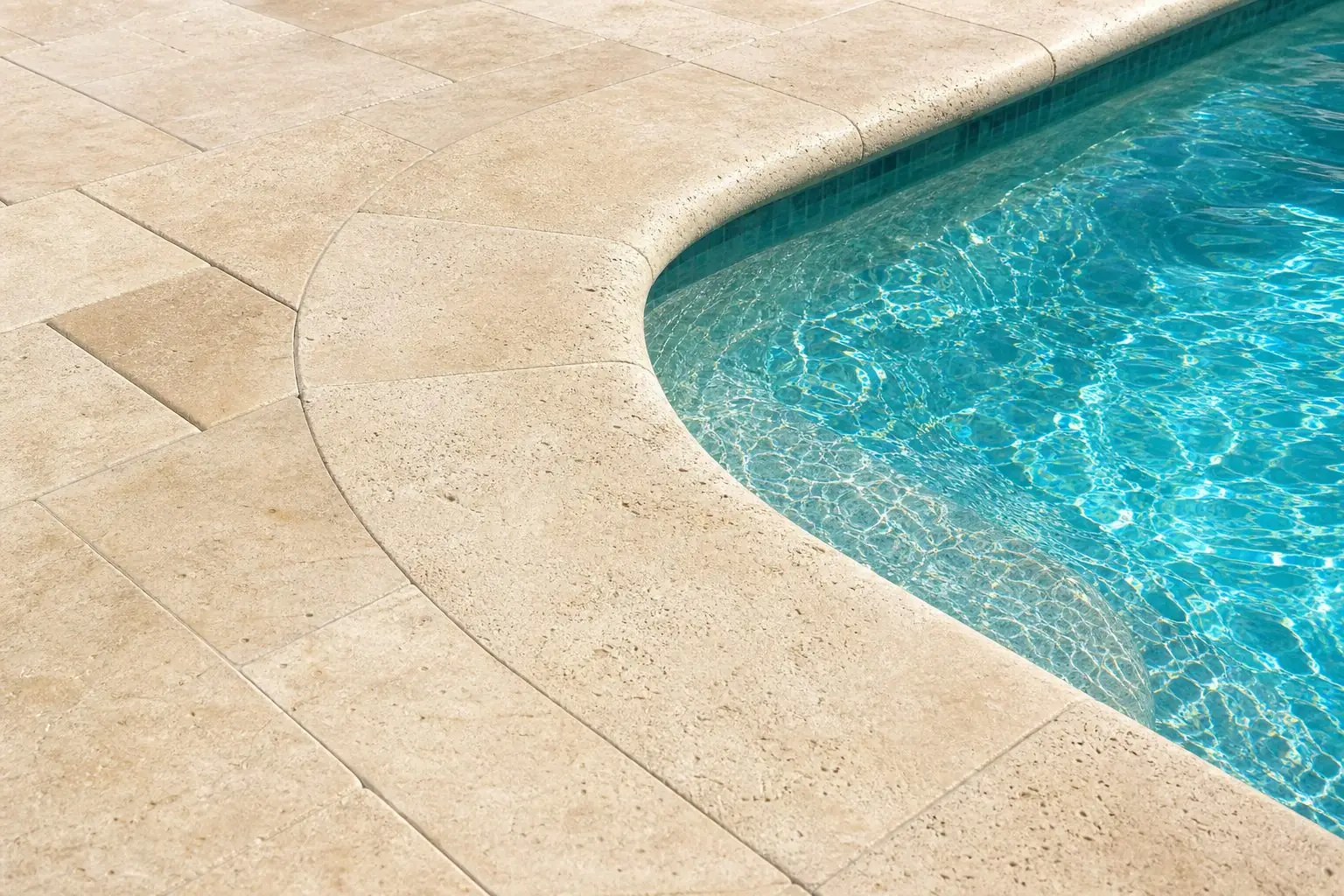
Travertine and concrete pavers are the two materials South Florida homeowners ask about most for patios and pool decks. Both can look beautiful on a large home. The right choice depends on where the surface is, how you use it and the look you want.
Quick answer
For a pool deck or a Mediterranean or Spanish style home, most homeowners choose travertine for its cooler feel and natural look. For a large entertaining patio where you want a specific color, pattern or border, concrete pavers give more design options. Many luxury projects use both: travertine around the pool and pavers for driveways or side areas.
Which one is cooler to walk on?
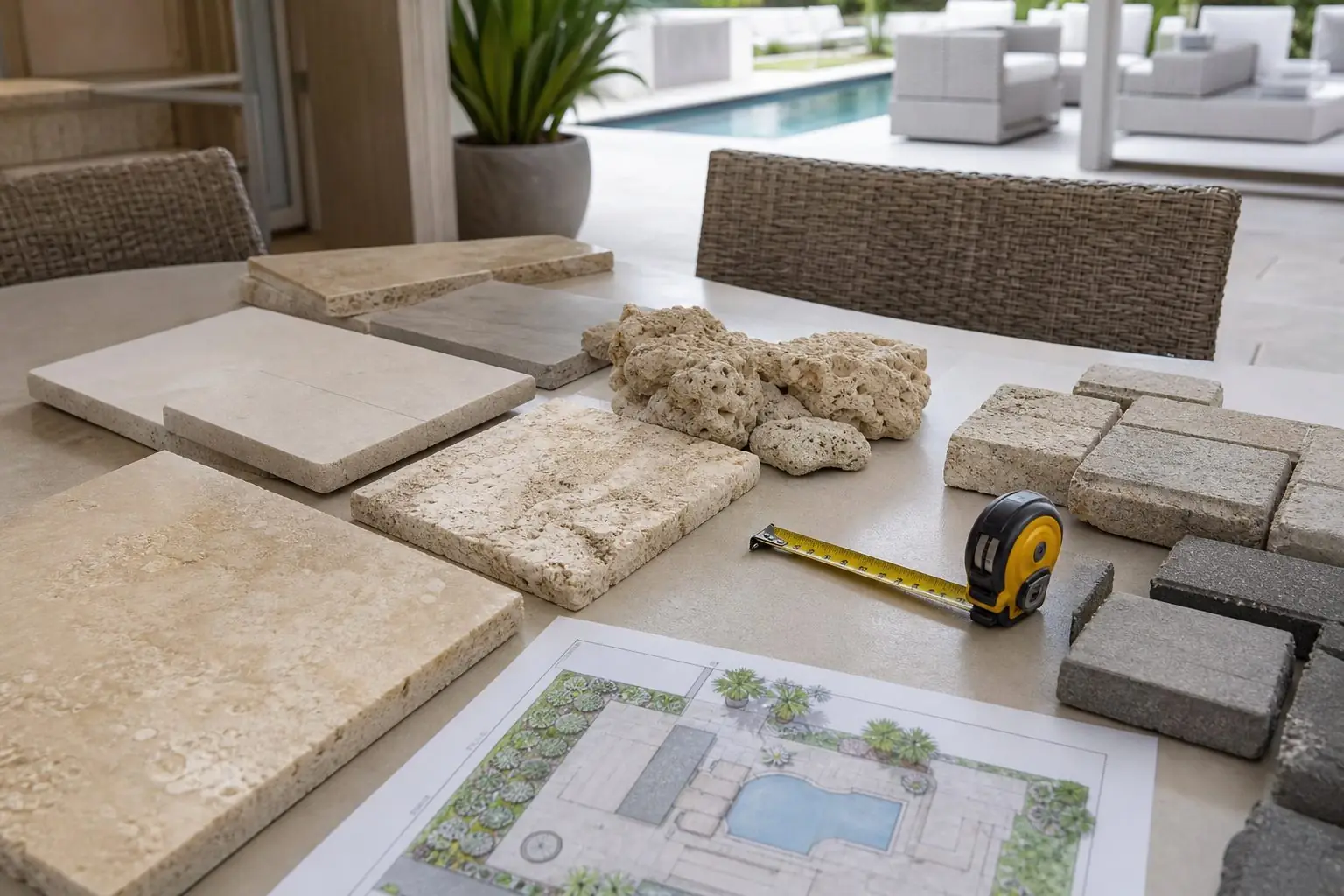
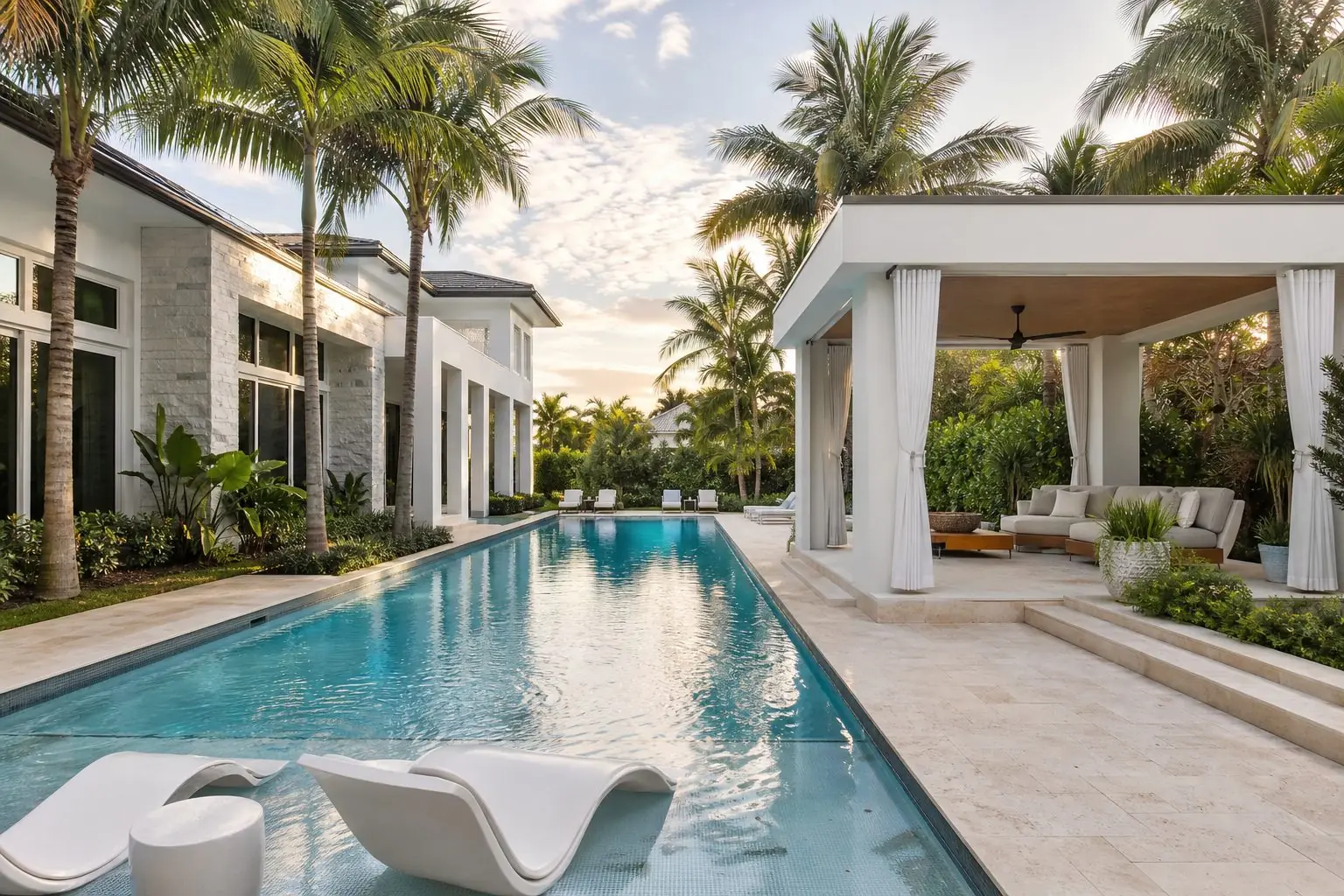
Light travertine stays noticeably cooler in direct sun than dark concrete pavers. That is why it is so common around pools in Miami, Fort Lauderdale and Palm Beach. If you choose concrete pavers, lighter colors help a lot.
Which one has better grip when wet?
Tumbled travertine has a softly textured surface with good grip. Concrete pavers also come in textured finishes. Avoid polished or sealed-to-a-gloss surfaces anywhere people walk wet and barefoot.
How do they compare on looks?
Travertine
A natural stone with soft color variation, often laid in a French pattern. It looks warm and timeless, especially with cream stucco, barrel-tile roofs and arched doors.
Concrete pavers
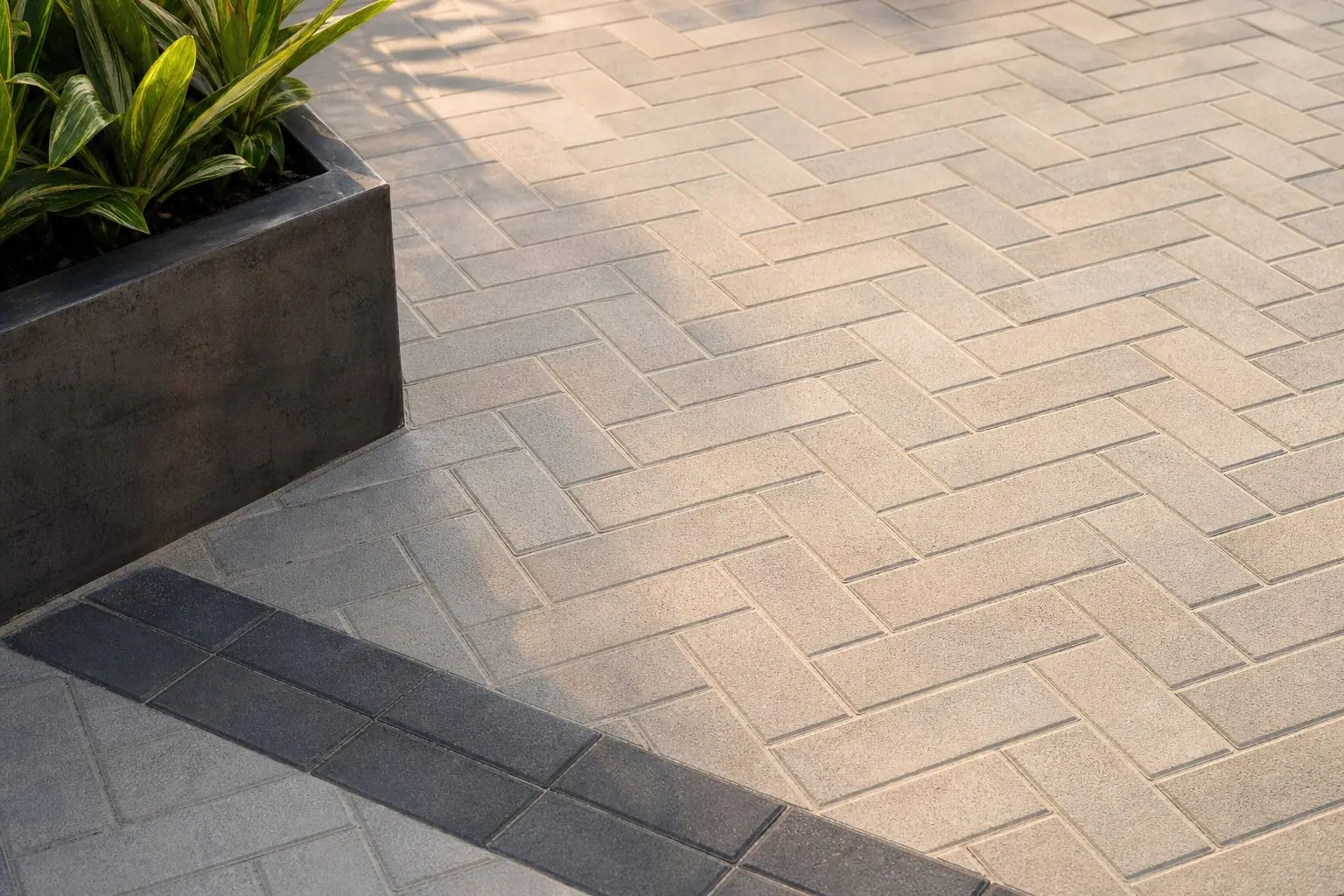
Made in factories, so they are very consistent. They come in many colors, sizes and patterns, from classic brick shapes to large modern slabs, and borders are easy to add.
How do they handle Florida weather?
Both are laid as individual units over a compacted base, so they can flex a little without cracking the way a single slab can. Water drains through the joints, which helps in heavy rain. Sandy soil and summer storms are manageable when the base, edge restraint and slope are done properly, which is the part your YardVida Certified Contractor checks at the site visit.
What upkeep does each need?
- Travertine: sealing helps resist stains from leaves, sunscreen and spills. A yearly clean keeps it bright.
- Concrete pavers: some colors fade over years in strong sun. Joint sand may need topping up, and a clean and reseal refreshes them.
Which is better for which part of the yard?
- Pool deck and coping: travertine or coral stone
- Large entertaining patio: either, depending on style
- Driveway and motor court: concrete pavers are the usual choice
- Garden paths: stepping stones or pavers set in gravel
Side-by-side comparison
- Feel in the sun: travertine is cooler; light pavers are close, dark pavers get hot
- Grip when wet: tumbled travertine and textured pavers both grip well
- Look: travertine is natural and varied; pavers are consistent with many colors and patterns
- Sizes and patterns: pavers offer the most options; travertine is usually laid in a French or ashlar pattern
- Stains: travertine benefits from sealing; pavers also look better cleaned and sealed
- Color over time: travertine keeps its natural tone; some paver colors fade in strong sun
- Repairs: both can be lifted and replaced unit by unit
What about porcelain and coral stone?
Two more materials come up often on larger South Florida homes. Porcelain pavers are dense, stain resistant and come in large modern formats that look like stone or concrete. They need a textured outdoor finish for grip. Coral stone (keystone) is the classic Florida material with visible fossils, often used on older Mediterranean homes and for pool coping.
How to choose for your home
Start with the architecture. A cream stucco home with barrel tiles and arched doors almost always looks best with travertine or coral stone. A white modern home with big glass walls often looks best with large porcelain or smooth concrete slabs. Then think about use: bare feet all day near the pool point to lighter natural stone; a motor court or driveway points to heavy-duty pavers.
Maintenance calendar for South Florida
- After the rainy season: clean off algae and leaf stains, check joints
- Once a year: a gentle clean; reseal travertine as recommended by your installer
- After a hurricane: clear debris, check for settled areas near drains and downspouts
- Anytime: rinse off pool chemicals and sunscreen splashes near the coping
See both on your own home
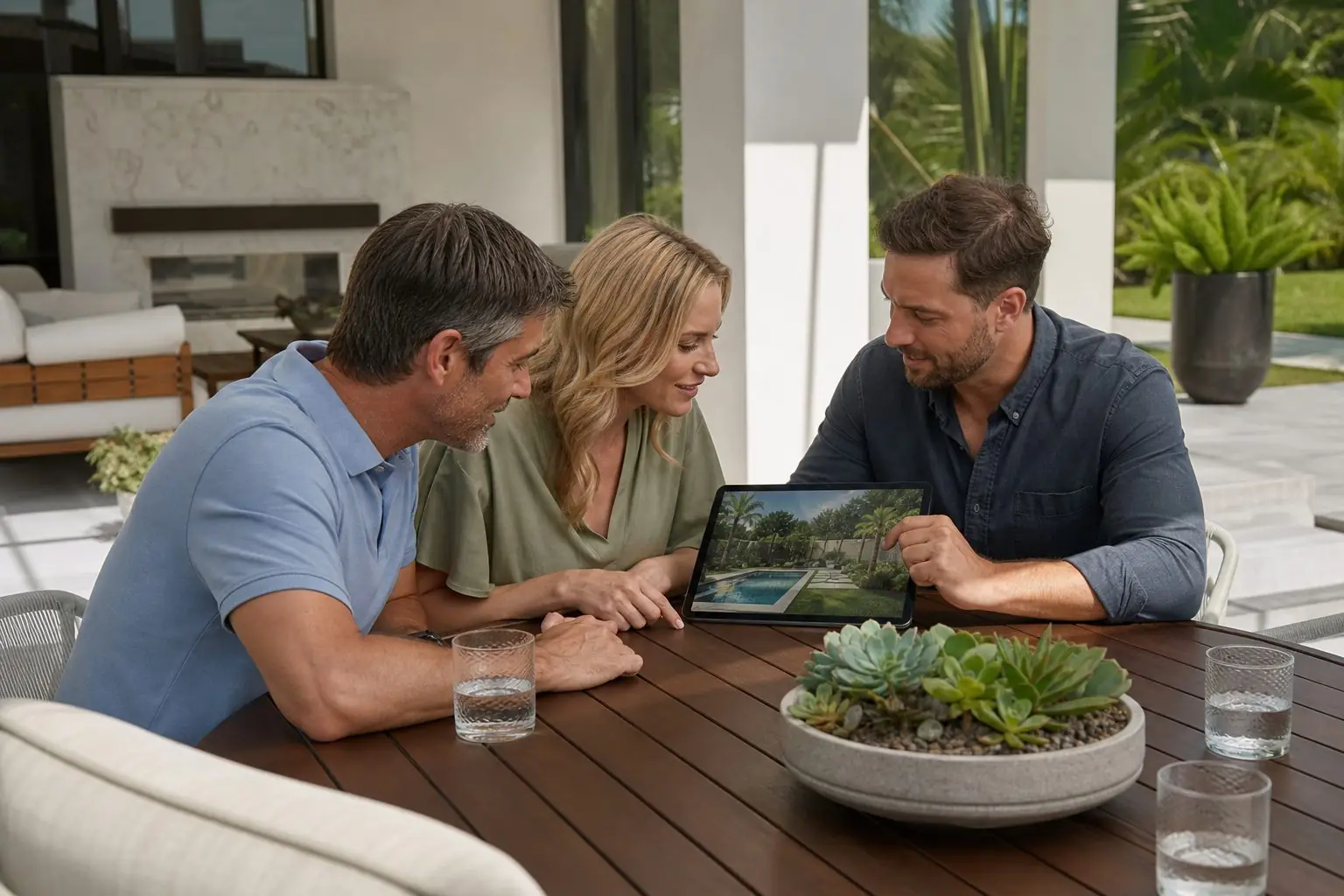
The fastest way to decide is to see both. The YardVida AI designer shows your backyard with each material, before and after, day and night, and on video.
Get your free concept, then a YardVida Certified Contractor can bring real samples to your site visit. For more pool ideas, read luxury pool deck ideas for South Florida homes.
Questions homeowners ask
Is travertine better than pavers for a pool deck?
For most South Florida pool decks, yes: light travertine stays cooler and has good grip in tumbled finishes. Concrete pavers are a good choice when you want a specific color or pattern.
Does travertine need to be sealed?
Sealing is recommended because travertine is porous. It helps resist stains and makes cleaning easier.
Do concrete pavers fade in Florida?
Some colors can fade over years of strong sun. Lighter, through-colored pavers and periodic cleaning and sealing help.
Can I mix travertine and pavers?
Yes. Many large properties use travertine around the pool and concrete pavers for driveways, side yards or paths.
Pictures marked as AI design concepts were created by the YardVida AI designer. Rules, permits and materials vary by city and property; your YardVida Certified Contractor confirms what applies to your home.
 October 28, 2026
 September 29, 2026